Ambassadors Call for Albanian Citizens to Participate Actively in Monitoring and Elections
 During an international conference on direct democracy and citizen...
February 2, 2017
During an international conference on direct democracy and citizen...
February 2, 2017


Dr. Zijad Becirovic, Director of International Institute for Middle-East and Balkan Studies (IFIMES) base in Ljubljana, Slovenia, considers the current situation in Albania as severely polarised lacking the consensus which is of vital importance for its future.
In an exclusive interview with Albanian Daily News Mr. Becirovic says that the incumbent Edi Rama government represented refreshment in the region for the first two years and PM Rama himself was regarded as the best Prime Minister in the region. But, according to him, unfortunately this impetus has gradually faded and now Albania is in a typical pre-election period.
"Albania may be a factor of (in)stability and peace in the region, notably since it has an influence on the majority Albanian community in Kosovo, on the strong Albanian community in Macedonia and on considerable Albanian communities in Montenegro and in south Serbia (Presevo, Medvedja and Bujanovac municipalities). Depending on its behaviour in regional relations, Albania may or may not be a factor of stability and peace," said the IFIMES Director.
Further on he sees with great worry the situation in the Western Balkans where as he says there are several frozen conflicts in the Balkans. "To put it simply, many international solutions to problems in the Balkans merely established equilibrium between the actors who remained similarly dissatisfied. This only brings relative peace and fragile stability in the region. It is a kind of temporary equilibrium which causes numerous frustrations and triggers new crises leading to future conflicts," Mr. Becirovic told Albanian Daily News holding responsible the international community's policy for producing new frozen conflicts.
The IFIMES Director is of the opinion that the whole region should be collectively accepted for EU membership to overcome the difficult complex situation in the region, of course, after certain preparations. "But (Brussels) answer is always the same and typically bureaucratic: the countries are to be accepted individually. However, collective EU accession would resolve many problems since the whole region functions according to the "communicating vessels" system," said Mr. Becirovic in the following interview.
- In the first place, on behalf of Albanian Daily News I thank you for being so kind to share your opinions with our readers. IFIMES under your directorship has turned into a shrewd and competent source of comprehensive analysis and prognosis of the developments in the Middle East and the Western Balkans. Given this, Sir, it would be valuable to hear your evaluation of the situation in the Balkans as we have already entered 2017. Which are some of the most complicated problems inherited in this region from the last year?
There are several frozen conflicts in the Balkans. To put it simply, many international solutions to problems in the Balkans merely established equilibrium between the actors who remained similarly dissatisfied. This only brings relative peace and fragile stability in the region. It is a kind of temporary equilibrium which causes numerous frustrations and triggers new crises leading to future conflicts. It is generally known that the international community's policy produces new frozen conflicts.
After all, if we look at the refugee/migrant crisis, all the leading actors are dealing with the consequences and not with the reasons for those crises. The region is basically left on its own. The only goal of the international community is to preserve relative stability and fragile peace. No one deals with the economic recovery and development of the region.
The World War II ended in 1945 and twenty years later Europe was renovated. In comparison, 20 years after its wars, the Balkan region is in a worse situation than it was at the end of 1980s, although the general conditions and the global situation are much better now. Thus Croatia had higher GDP in 1979 than in 2015. The degree of technological development has never been higher in human history. There are fewer international wars, the financial markets and globalisation provide new opportunities, while the Balkan region not only stagnates but even lags behind in comparison with the developed world.
On the other hand, the region has become hostage to the phenomenon called "politisation of crime and criminalisation of politics" due to tight connections that were established between the politicians and criminals during the crisis period or war years. Their mutual trust should be broken up from the inside and not from the outside. As long as this phenomenon is present, I see no possibility for progress, since such structures will not allow new political and economic elites to enter the scene unless they can control them. The situation is complex and there is no simple answer.
- Bosnia and Herzegovina continues to remain a politically and ethnically divided country with potential dangerous problems two decades since the end of the bloody war. An evidence of this division was the referendum held last year in Bosnia's Serb-dominated entity of Republika Srpska, as well as several high-profile war-crimes trials and arrests. There are growing concerns that separatists pushing to split up Bosnia along ethnic lines could endanger its bid to join the EU and force international powers to intervene. Which is your opinion about the future of this country where 'integration into Europe versus disintegration at home' seems to be the main clash of the political elite?
Not all states in the region were formed as a result of internal consensus, but mostly as a consequence of the will of the superpowers. This has been happening in the world for at least the last 100 years. Bosnia and Herzegovina went through a bloody war. It has strong neighbours - Serbia and Croatia - who have their ethnic communities in Bosnia and Herzegovina and often (mis)use them for their own interests. The EU is inert, although it could actually do much more for Bosnia and Herzegovina, at least since it should be burdened with a "guilty conscience" for having let down this country after the disintegration of former SFRY.
I have often stressed that the EU should accept Bosnia and Herzegovina's membership as a matter of priority. Of course, after EU accession of Bulgaria and Romania, with no disrespect for these two countries, it should be noted that no accession criteria apply any more. Nevertheless, the EU still constantly adopts new rules and new conditions for accession. This is unfair and unnecessary. I have often said that the whole region should be collectively accepted for EU membership, of course after certain preparations. But the answer is always the same and typically bureaucratic: the countries are to be accepted individually. However, collective EU accession would resolve many problems since the whole region functions according to the "communicating vessels" system. The region is constantly in an election campaign process, since an election campaign in one country spills over into other countries. At the moment there is an election campaign for presidential election in Serbia, which has already triggered tensions between Serbia and Kosovo, Serbia and Bosnia and Herzegovina, Serbia and Croatia etc. Unfortunately, the EU is now dealing with its internal problems and has put accessions of new members on hold. Most of the credit for existence of Bosnia and Herzegovina goes to the USA. When someone asks me whether Bosnia and Herzegovina will disintegrate, my answer is if the USA disintegrates, Bosnia and Herzegovina will disintegrate, too.
- Albania's domestic political situation continues to be problematic with many conflicts between majority and opposition when five months have remained from the date of general elections. There are also lots of social worries as organized crime, the so-called 'canabization' of the country, corruption, high unemployment, poverty and a deep gap between the rich and the poor. But at international level, Albania is considered as a factor of peace and stability in the region. Does it seem to you that there is a kind of contradiction between 'hostility at home' and 'factor of peace and stability in the region'?
Albania is a severely polarised country lacking the consensus which is of vital importance for its future. The incumbent Edi Rama government represented refreshment in the region for the first two years. Rama was regarded as the best Prime Minister in the region. Unfortunately this impetus has gradually faded and now Albania is in a typical pre-election period. Albania may be a factor of (in)stability and peace in the region, notably since it has an influence on the majority Albanian community in Kosovo, on the strong Albanian community in Macedonia and on considerable Albanian communities in Montenegro and in south Serbia (Presevo, Medvedja and Bujanovac municipalities). Depending on its behaviour in regional relations, Albania may or may not be a factor of stability and peace.
-The EU-mediated dialogue between Pristina and Belgrade has been marred during the last weeks by some incidents between the two countries, and to mention two highlights are the detention of the former premier of Kosovo Ramush Haradinaj by French police on an arrest warrant issued by Serbia, and the banning of a Serb train bearing the slogan 'Kosovo is Serbia' to enter Kosovo. Do you think that such incidents show the fragility of the dialogue between Kosovo and Serbia, and according to you which are the expectations for a final settlement of the dispute which could lead to the recognition of Kosovo by Belgrade?
It is important to continue the EU-mediated dialogue between official Belgrade and Pristina and to give it a new impetus. The incident when the train bearing the slogan "Kosovo is Serbia" was sent from Belgrade to Mitrovica without prior announcement and agreement with the Kosovo government is unacceptable behaviour which harms the normalisation of relations. The detention of Ramush Haradinaj has once more pointed to the disputable Serbian arrest warrants and the (mis)use of the principle of universal jurisdiction over war crimes which is selectively used as Serbia's foreign policy instrument. Worrying information is that the Association of Serbian Municipalities will be proclaimed unilaterally on February 15, 2017, which may cause destabilisation in the region. If Serbia wishes to become a full EU member, it must have clearly defined borders and regulated relations with its neighbouring countries. Serbia cannot ignore the fact that Kosovo is its neighbour and the EU will not allow such behaviour if Serbia is to become its member.
-As a follow up of the above question, do you see any possibility for the implementation of the proposal of the well-known Academic, Rexhep Qosja, who suggested a few days ago as a solution a scheme according to which Serbia could get northern Mitrovica while Kosovo could get Presevo Valley and afterwards join Albania?
Some prominent Serbian and Albanian politicians as well as other public figures have the division of Kosovo in their minds and plans. The borders in this region were defined with the proclamation of Kosovo's independence in 2008. There are only about 20 mono-ethnic countries in the world, all the other countries are multiethnic. Even if only one community lived in certain area, this does not mean that all the problems would disappear - it may actually lead to new problems. Nevertheless, such theses and ideas are occasionally presented, but this is a very simplified view of the complex and complicated situation in the region. Therefore, small steps should be taken to preserve the fragile peace and relative stability. The new US administration should bear this in mind. The problems in the region have not occurred overnight and cannot be resolved overnight. We have to learn to live one with another and together with others.
- From January 20, 2017 the United State has a new president, Donald Trump. Even in his inaugural speech he unveiled a complete turn with regard to the US policy. Do you think that such a change will have its impact on the Western Balkans, and if yes in what way it will be felt at a time when much is spoken of the growth of Russian involvement in the region?
The new US administration brings along a new spirit with the announced changes. The position of the West Balkans will depend on the new geopolitical agreements and relations between the world superpowers. The world is changing, and the fact that Donald Trump has become new US President will probably accelerate those changes.
The United States of America takes most credit for peace and stability in the region and will not allow its enormous and quite successful investment in this region to change into something else overnight. The Balkans has always been the crossroads of geopolitical interests and of superpowers, and this will remain in the foreseeable future.
During an international conference on direct democracy and citizen...
February 2, 2017
 On the World Elections Day the head of the Central
Election Commission (CEC),...
February 2, 2017
On the World Elections Day the head of the Central
Election Commission (CEC),...
February 2, 2017
 Former socialist MP, now leader of LIBRA Party, Ben
Blushi denounced on Thursday...
February 2, 2017
Former socialist MP, now leader of LIBRA Party, Ben
Blushi denounced on Thursday...
February 2, 2017
 The World Bank’s Board of
Executive Directors has approved a $ 70 million...
February 2, 2017
The World Bank’s Board of
Executive Directors has approved a $ 70 million...
February 2, 2017
 Prime Minister Edi Rama called on banks and businesses on Tuesday to become part of...
January 31, 2017
Prime Minister Edi Rama called on banks and businesses on Tuesday to become part of...
January 31, 2017
 The European Bank for Reconstruction
and Development, EBRD, released Friday in...
January 29, 2017
The European Bank for Reconstruction
and Development, EBRD, released Friday in...
January 29, 2017
 “What the Butler Saw”, a play written by the British drama-writer, Joe Orton,...
February 2, 2017
“What the Butler Saw”, a play written by the British drama-writer, Joe Orton,...
February 2, 2017
 A large number of houses in the stone city of Gjirokastra are currently partially or...
February 2, 2017
A large number of houses in the stone city of Gjirokastra are currently partially or...
February 2, 2017
 La Traviata’ main character, Violeta, came on the stage of Stara Zagora Opera...
February 2, 2017
La Traviata’ main character, Violeta, came on the stage of Stara Zagora Opera...
February 2, 2017
 Attorney General Adriatik Llalla unveiled on
Thursday that he was the high...
February 2, 2017
Attorney General Adriatik Llalla unveiled on
Thursday that he was the high...
February 2, 2017
 The tensed situation generated by the accusations launched on Thursday by the US...
February 2, 2017
The tensed situation generated by the accusations launched on Thursday by the US...
February 2, 2017
 ‘US Ambassador, Donald Lu can’t rule the General Prosecution Office’. This...
February 2, 2017
‘US Ambassador, Donald Lu can’t rule the General Prosecution Office’. This...
February 2, 2017
 Speech of the OSCE Ambassador in Albania, Bernd Borchardt:"I am pleased to...
February 2, 2017
Speech of the OSCE Ambassador in Albania, Bernd Borchardt:"I am pleased to...
February 2, 2017
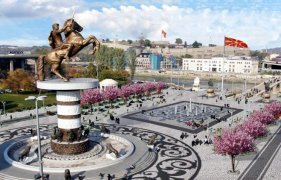 In the midst
of a “reheated” Tirana-Belgrade atmosphere, where the first...
January 23, 2017
In the midst
of a “reheated” Tirana-Belgrade atmosphere, where the first...
January 23, 2017
 93 years ago, on the 21st January 1924, Vladimir
Ilyich Lenin followed so many of...
January 23, 2017
93 years ago, on the 21st January 1924, Vladimir
Ilyich Lenin followed so many of...
January 23, 2017
 President Donald Trump threatened in a phone call with his Mexican counterpart to...
February 2, 2017
President Donald Trump threatened in a phone call with his Mexican counterpart to...
February 2, 2017
 A phone call between US President Donald Trump and Australian PM Malcolm Turnbull...
February 2, 2017
A phone call between US President Donald Trump and Australian PM Malcolm Turnbull...
February 2, 2017
 Greece reported mass incursions by Turkish military aircraft on Wednesday, amid...
February 1, 2017
Greece reported mass incursions by Turkish military aircraft on Wednesday, amid...
February 1, 2017